

Out of the Wild and Onto the Farm: The Story of Cultivated Cordyceps
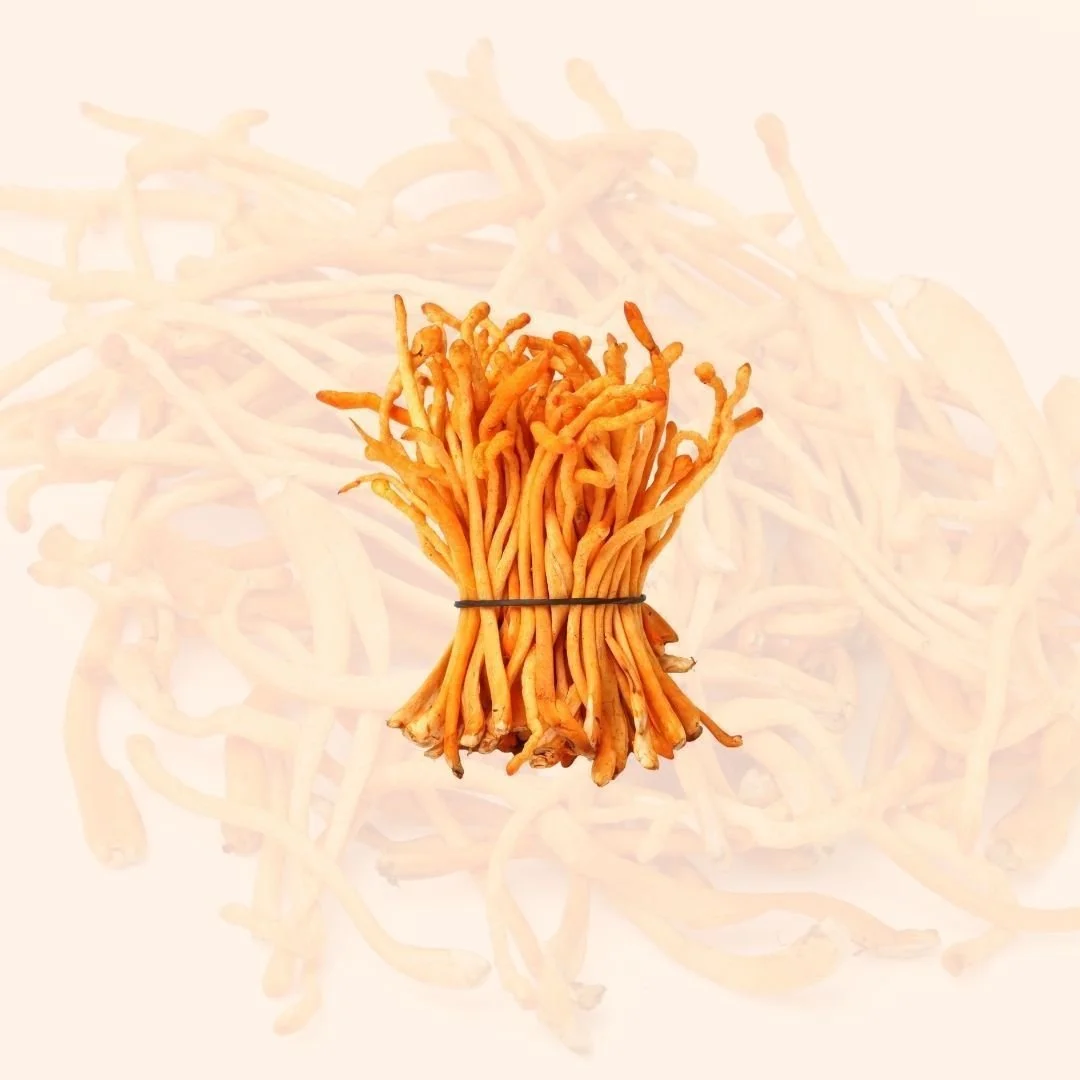
For centuries, Cordyceps held a near-mythical status in traditional herbalism. Revered for its ability to support stamina, vitality, and resilience, this unique fungus was once so rare that it was reserved almost exclusively for royalty. Today, vibrant orange Cordyceps fruiting bodies are accessible to anyone seeking functional fungi in their daily routines.
However, the shift from wild-harvested specimens to today’s pure, agricultural crops didn't happen overnight. The origin of Cordyceps cultivation spans two distinct developments: early laboratory research in the West and Japan, and commercial-scale agricultural breakthroughs in East Asia.
1. The Biological Origins
In nature, wild Cordyceps species grow primarily on the Tibetan Plateau and in high-altitude Himalayan regions. The most famous wild species—Ophiocordyceps sinensis (caterpillar fungus)— is a parasitic fungus that infects ghost moth larvae. Because it relies on a specific insect host and extreme alpine conditions, wild Ophiocordyceps sinensis cannot be easily grown or fruited on a commercial agricultural scale.
Furthermore, wild harvesting of this alpine species places immense pressure on fragile mountain biomes. To make the benefits of functional fungi accessible without disrupting wild ecosystems, researchers and cultivators had to look toward alternative species and innovative growing methods.
2. Early Experimental Cultivation (Late 19th & Early 20th Century)
Attempts to grow Cordyceps artificially began when mycologists shifted focus to Cordyceps militaris, a related species containing similar active compounds (like cordycepin and adenosine) that can grow without requiring live caterpillars:
United States (1894): Early laboratory cultivation of Cordyceps militaris was documented at Cornell University by researcher Miss Green, marking one of the earliest recorded attempts to culture the fungus in a controlled setting.
Japan (1930s): Japanese mycologist Yosio Kobayasi performed early experiments growing Cordyceps on grain beds (specifically rice) rather than insect hosts, proving that the fungi could draw nutrients effectively from plant-based substrates.
3. Modern Commercial Cultivation Breakthroughs (1980s–2000s)
Large-scale commercial cultivation as we know it today originated primarily in China, South Korea, and Taiwan:
Liquid Fermentation / Mycelium Cultivation (1980s): In the 1980s, Chinese scientists isolated fermented strains (such as CS-4 / Paecilomyces hepiali) from wild Cordyceps. This allowed liquid vat fermentation of Cordyceps mycelium at an industrial scale without relying on wild harvests.
Substrate & Solid-State Fruiting (1990s–2000s): Growers in South Korea and China perfected indoor, climate-controlled fruiting of Cordyceps militaris on vegetarian nutrient substrates (such as rice, liquid nutrients, and clean agricultural media). This breakthrough enabled commercial farms to produce the vibrant orange fruiting bodies seen today in functional teas, powders, and supplements.
Honoring the Agricultural Journey
The modern ability to cultivate bright, potent Cordyceps militaris on clean agricultural substrates represents over a century of global scientific curiosity and grower ingenuity. By trusting in these established agricultural systems rather than exploiting wild populations, we gain the best of both worlds: pure, consistent, and bioavailable functional fungi that respect the limits of the natural environment.
Sources:
Behrens, J. (2024, November 30). The sustainability of cordyceps | species specific sustainability | herbal reality. Herbal Reality. https://www.herbalreality.com/herbalism/sustainability-social-welfare/species-specific-sustainability/the-sustainability-of-cordyceps/
Dong, C., Guo, S., Wang, W., & Liu, X. (2015). Cordyceps industry in China. Mycology, 6(2), 121–129. https://doi.org/10.1080/21501203.2015.1043967
Dorr, A. (2019, May 30). Cordyceps Militaris Production: Past, Present and Future. Mushroom Revival. https://www.mushroomrevival.com/blogs/blog/cordyceps-militaris-production
Jędrejko, K. J., Lazur, J., & Muszyńska, B. (2021). Cordyceps militaris: An overview of its chemical constituents in relation to biological activity. Foods, 10(11), 2634. https://doi.org/10.3390/foods10112634
Rowell, R. (2026, August 29). Where do cordyceps come from? Your guide to these powerful fungi. Mycoterra Farm. https://shop.mycoterrafarm.com/blogs/resources/where-do-cordyceps-come-from-your-guide-to-these-powerful-fungi
Spore & Bloom Editorial Team. (2026, September 28). Cordyceps through history: From the tibetan plateau to cultivation. Spore & Bloom. https://sporeandbloom.co.uk/blogs/library/cordyceps-through-history
