

What are Functional or Medicinal Mushrooms?
Written By: Bashira Muhammad
Back in the day we referred to functional mushrooms as medicinal mushrooms because they had medically relevant compounds in their bodies.
Somewhere along the lines I remember the term functional mushrooms really started to take off. To define what makes a mushroom medicinal we will first look at what makes mushroom a mushroom.
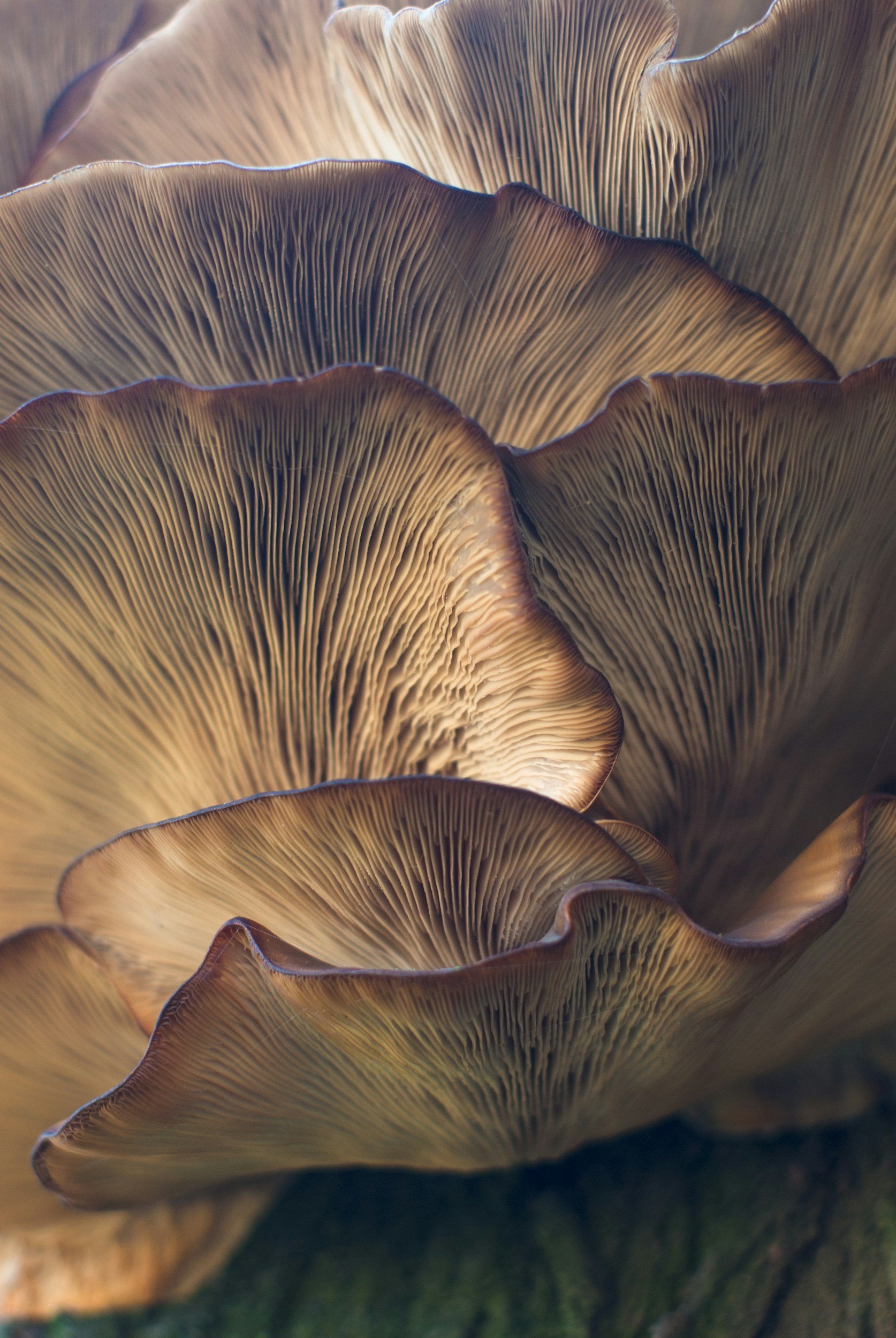
So, the mushroom is essentially the ephemeral, reproductive structure of a much larger organism within kingdom Fungi. While much of the organism exists as an underground network of mycelium, the mushroom represents a specific, observable life stage: reproduction and maturation.
This distinction is important, especially when we look at their cellular makeup. Unlike the cellulose-based walls of plants, fungal cell walls are composed of chitin—the same tough material found in the exoskeletons of insects.
Nutritionally, mushrooms are remarkable; they are typically low in fat, high in fiber, and dense with essential vitamins and minerals. Beyond basic nutrition, they are rich in secondary metabolites, including terpenes and phenolic compounds. Most notably, they are a primary source of beta-glucans. As the most widely studied and immunoactive compounds in the fungal kingdom (Hobbs, 2021), these polysaccharides act as a cornerstone for their role in systemic wellness.
Defining the Medicinal Nature of Fungi
It is vital to be precise about what is meant when we categorize a mushroom as medicinal. In the context of traditional herbalism, "medicinal" does not equate to a pharmaceutical drug or a prescribed, concentrated dose, even though in modern medicine countless pharmaceutical drugs come from fungi. Traditional herbalism recognizes a spectrum of potency. Many botanical and fungal allies are inherently benign and are intended for consistent, long-term use— what we often call "everyday medicine."
Tea is the quintessential delivery method for this practice. By steeping mushrooms, we are accessing their bioactive constituents in a gentle, rhythmic way. From a mycological and herbalist perspective, this is not about "curing" or "treating" specific ailments in a clinical sense; it is about the ancient recognition of food as medicine. This philosophy identifies these organisms as supportive tools that help the body maintain its own natural equilibrium. By distinguishing between acute, high-potency clinical applications and the gentle, systemic support provided by an everyday tea, we can honor both the biological reality of the mushroom and the traditions that have utilized them for centuries.
My Guiding Pillars
This historical record, paired with modern analytical rigor, is the primary driver behind my own tea formulations. In selecting my five key mushrooms, I rely on four guiding pillars to ensure quality and integrity:
Safety: I strictly evaluate the potential for misidentification, ensuring that no mushroom used in my formulations risks being confused with toxic or look-alike species.
Sustainability: I prioritize the use of controlled cultivars over wild-foraged specimens. This is a deliberate choice to build a responsible business model while minimizing my ecological footprint.
Historical Efficacy: I lean on the deep, documented history of usage, which identifies the mushrooms most consistently relied upon to maintain human resilience over generations.
By blending this technical screening with traditional wisdom, I ensure that my tea formulations are not just biologically sound, but deeply grounded in human experience. We aren't just brewing tea; we are honoring a long-standing, natural rhythm of holistic health.
Disclaimer: These statements have not been evaluated by the Food and Drug Administration. This product is not intended to diagnose, treat, cure, or prevent any disease.
Sources:
Hobbs, C. (2021). Medicinal Mushrooms: The essential guide. Storey Publishing.
Further Reading
Barrett, J. (2017). Do poisonous mushrooms have a pharmaceutical purpose? In Pharmacy Times. https://www.pharmacytimes.com/view/do-poisonous-mushrooms-have-a-pharmaceutical-purpose
Venturella, G., Ferraro, V., Cirlincione, F., & Gargano, M. L. (2021). Medicinal mushrooms: Bioactive compounds, use, and clinical trials. International Journal of Molecular Sciences, 22(2), 634. https://doi.org/10.3390/ijms22020634
