

What Studying the Environment Taught Me About Wellness
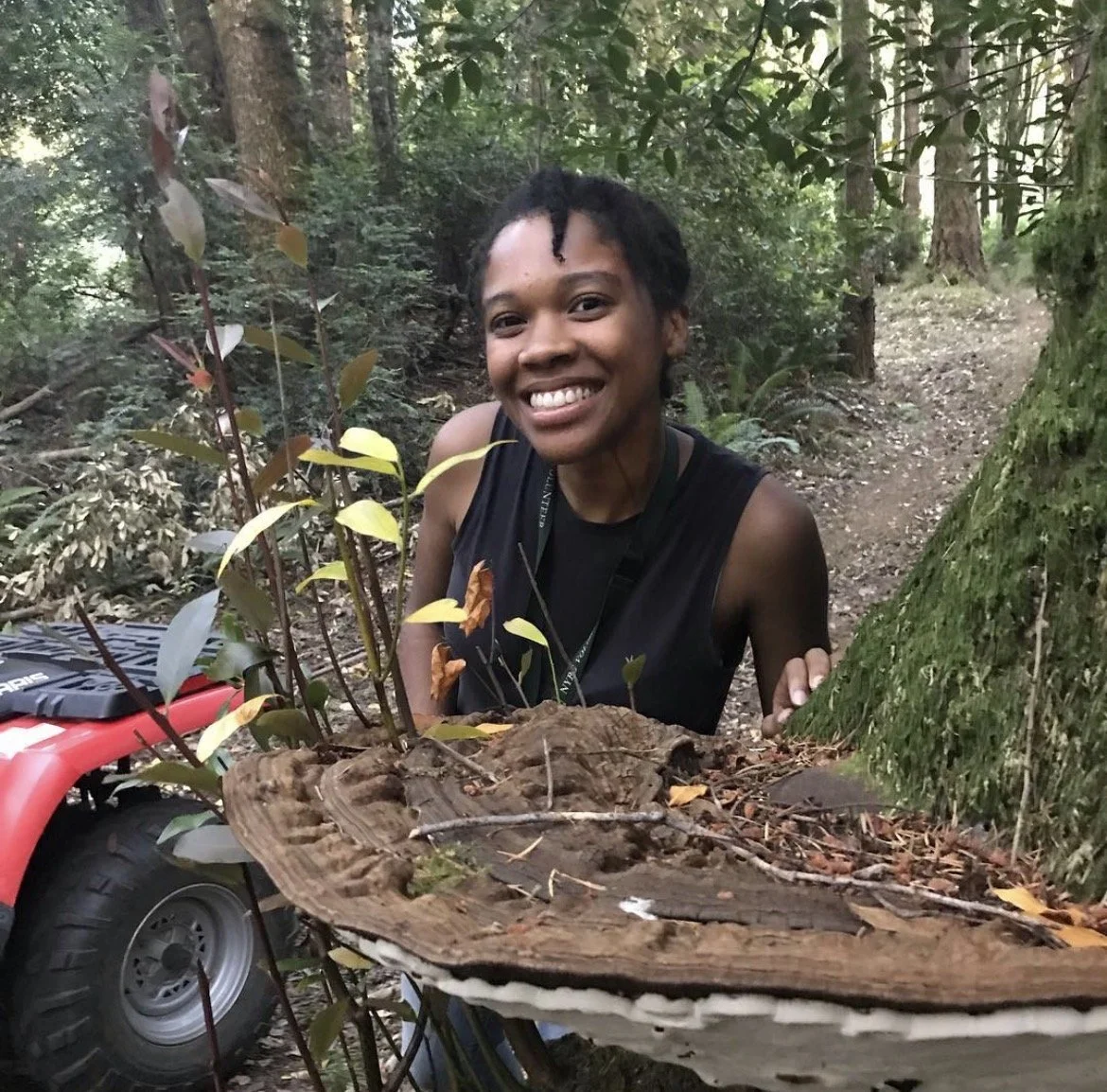
Summer 2018 on the Oregon Coast
Bashira standing by a Ganoderma applanatum mushroom.
What Studying the Environment Taught Me About Wellness
I went to college to study geography and the environmental sciences because I wanted to understand how the natural world works—and how humans fit within it. I was fascinated by landscapes, ecosystems, and the relationships between organisms that make life possible.
While I was in college, I attended a lecture by Paul Stamets about his book Mycelium Running. At the time, I was visiting Oregon through the National Student Exchange program and exploring the West Coast, trying to understand what made Oregon one of the most sustainable states in the country while New Jersey ranked near the bottom.
That lecture opened a wormhole.
Suddenly, fungi weren't simply mushrooms growing in the forest. They were connectors: decomposing what had passed, recycling nutrients, interacting with plants, shaping habitats, and helping create the conditions that make life possible for other organisms. The more I learned, the more fascinated I became by their potential to connect something I had previously thought of as separate—the health of people and the health of the planet.
I didn't really pivot from environmental science into fungi. Studying the environment led me further into them, and eventually, it changed the way I thought about wellness.
Nothing Exists in Isolation
One of the first lessons ecology teaches us is that nothing exists in isolation. A forest isn't simply a collection of individual trees; it is a web of relationships between plants, fungi, animals, microorganisms, soil, water, climate, and countless other factors. Change one part of the system and other parts respond, sometimes in ways that aren't immediately obvious.
The same principle can be applied to our understanding of health. For much of modern life, we're encouraged to think about wellness as a collection of individual problems with individual solutions: sleep better, eat this food, take this supplement, exercise more, reduce stress. There is value in all of those things, but the larger picture can get lost when we isolate one part from the whole.
Studying ecosystems taught me to look for relationships. Instead of asking only what something does on its own, I became more interested in what happens when it interacts with everything around it: how one thing affects another, what conditions allow a system to thrive, what happens when something important is removed, and what changes when a system is given enough time and resources to recover. Those questions gradually became part of how I think about human wellness, too.
We aren't separate from our environments. Our bodies, communities, food systems, and natural landscapes are all part of a larger web of relationships. That realization is part of why fungi became so important to me.
Fungi Taught Me to Think Differently
Fungi have been shaping ecosystems for more than a billion years. They decompose organic matter, recycle nutrients, interact with plants, and help create the conditions in which other organisms can flourish. They are also extraordinarily diverse, and that diversity makes it difficult to reduce fungi to a single role or function.
A mushroom that grows from a fallen log has a different ecological role from a fungus living in association with an insect. A species that breaks down dead wood interacts with its environment differently from one that forms relationships with living organisms. There isn't one fungal strategy for participating in an ecosystem.
That diversity is one of the things I find most fascinating about them, but it also offers a useful lesson for wellness: there isn't one universal formula for living well.
Different people have different bodies, environments, cultures, responsibilities, resources, and needs. Wellness is not a product we can simply purchase and apply to everyone in exactly the same way. It is something shaped by relationships—with ourselves, with other people, with our environments, and with the things we bring into our lives.
It is a relationship.
Why Mushrooms Became Tea
Golden Hourglass Teas grew from that philosophy. I've spent years studying and cultivating fungi, and I wanted to create a way for people to encounter mushrooms that felt approachable, enjoyable, and connected to their everyday lives. Tea felt natural because it already carries an element of ritual. It asks us to pause long enough to boil water, prepare something, wait, and then sit with it.
Mushroom tea asks for even more patience. Fungal cell walls contain chitin, a tough structural material that influences how their constituents are extracted, so rather than treating mushrooms like ordinary tea leaves that need only a few minutes in hot water, I use a slower hot-water preparation.
That is where the Golden Hourglass comes in.
The hour isn't simply a measurement of brewing time. It represents a philosophy: some things are worth slowing down for. In a culture that constantly rewards speed, convenience, and optimization, there is something quietly radical about giving yourself an hour to prepare a cup of tea. It gives the mushroom time, and it gives you time, too.
For brewing, I prefer a teapot with a built-in strainer. Glass is my favorite because it allows the original color and character of the tea to shine through, although ceramic works beautifully as well. But the important part isn't having the perfect teapot. It's creating a ritual you actually want to return to.
Wellness Requires Healthy Relationships with the Things We Consume
My environmental background also influences how I think about sourcing. I've personally cultivated 18 species of fungi, and that experience has given me an enormous respect for the work involved in growing mushrooms well. Cultivation can be scalable and can help reduce pressure on wild populations, which is why I prioritize cultivated mushrooms over wild-foraged specimens.
But sustainability isn't as simple as finding the closest possible source or assuming that one country, farming system, or production method is inherently better than another. I respect sourcing mushrooms from places where they are native to and where generations of knowledge about their cultivation and use exist. That includes China, despite the controversy that can sometimes surround Chinese sourcing.
To me, sustainability is a science of tradeoffs. The goal isn't to find a perfect system; it's to understand the system well enough to make better decisions within it. That means considering cultivation practices, ecological pressure, agricultural expertise, transportation, quality, cultural history, and the long-term health of the ecosystems involved. The same ecological thinking that taught me to look at the whole forest informs how I think about a single ingredient.
Five Fungi, Five Relationships with the World
The five mushrooms at the heart of Golden Hourglass each demonstrate a different relationship with their environment.
Red Reishi
Ganoderma lingzhi or lucidum
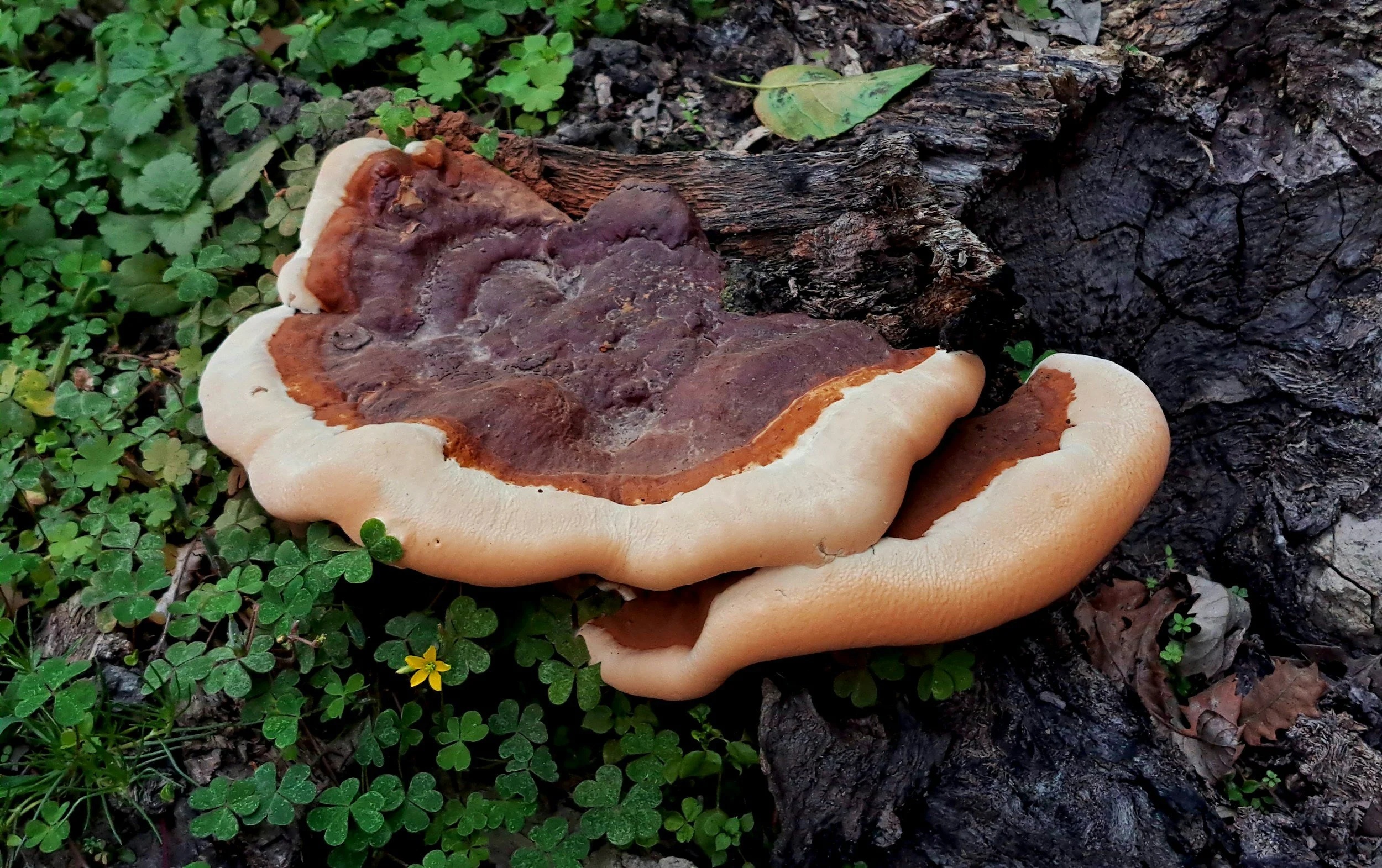
Red Reishi is native to forested regions across East Asia, particularly China, Japan, and the Korean Peninsula. In the wild, it grows in warm, humid hardwood forests, often appearing as a shelf-like bracket on dying or dead broadleaf trees. For centuries, Reishi has been revered in traditional East Asian herbal practices and associated with longevity, vitality, and spiritual cultivation.
Ecologically, Reishi is a white-rot decomposer. It breaks down complex components of wood and helps recycle nutrients back into the forest. Its appearance is almost as distinctive as its history: a kidney-shaped, reddish-brown cap with a glossy, lacquered surface and concentric growth rings. Its flavor is equally distinctive—deeply earthy, woody, and bitter, with subtle notes of dark cocoa and rich soil.
For me, Reishi belongs to the evening. I'm actually sipping Reishi Rose as I write this, with a little honey and agave. Sometimes I'll put on instrumentals by Sleeping At Last, breathe for a while, or stretch and let the day finally loosen its grip. Running a business makes it easy to carry the workday into the evening, so Reishi gives me a reason to stop.
You'll find it in Reishi Rose and Reishi Red, two blends designed for the quieter hours of the day.
Lion's Mane
Hericium erinaceus
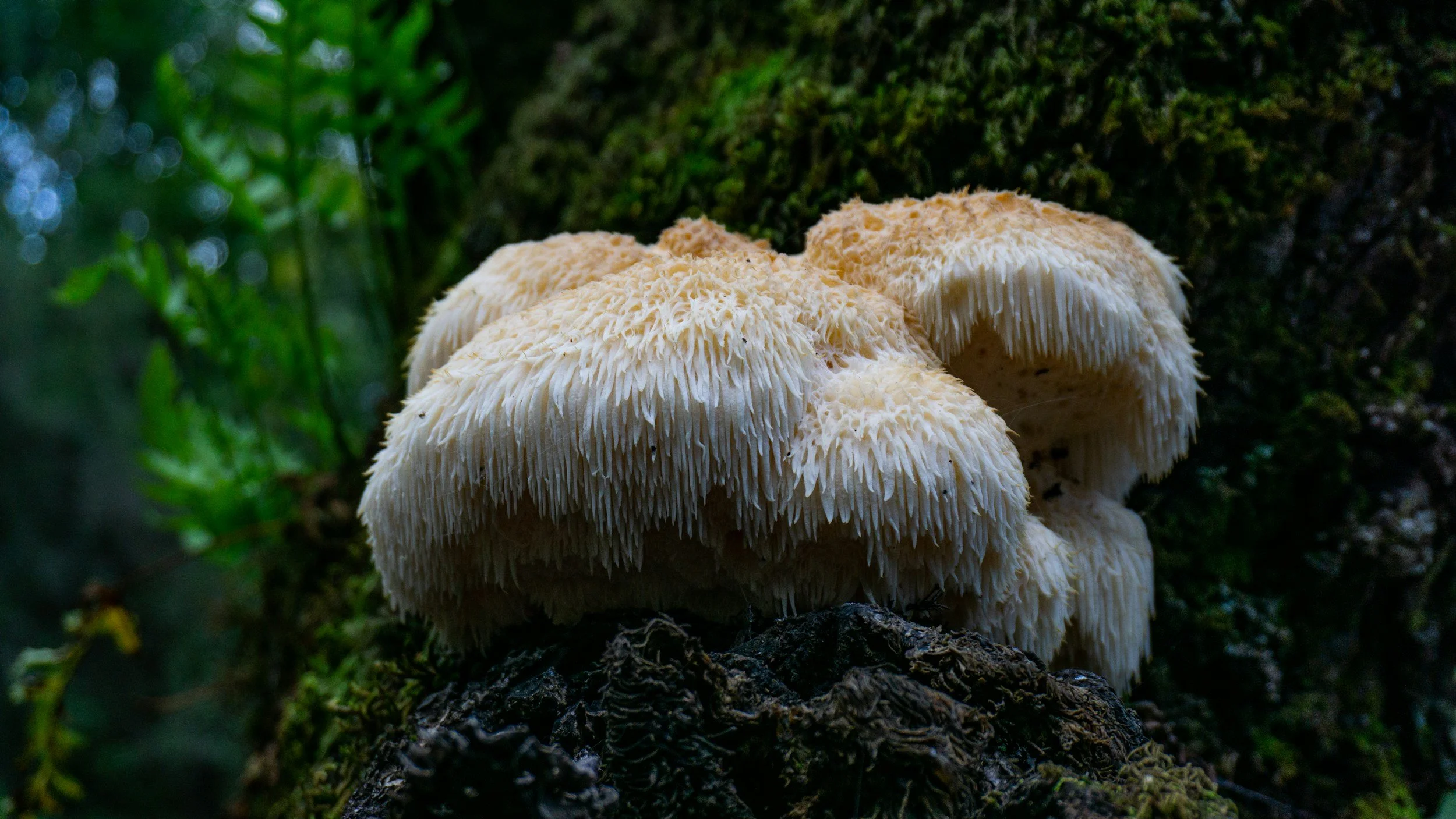
Lion's Mane is one of the most recognizable mushrooms in the forest. Native across temperate regions of North America, Europe, and Asia, it produces a rounded, cascading fruiting body covered in long white spines. Rather than forming a conventional cap and stem, it resembles a shaggy mane or a frozen waterfall.
Lion's Mane grows on hardwoods such as beech, oak, and maple. As a wood-decaying fungus, it participates in the decomposition of trees and contributes to the creation of habitat within forests. It has also been incorporated into traditional Asian wellness practices and daily food traditions for generations. Its flavor is considerably gentler than Reishi's—savory, mild, vegetal, and subtly sweet—which makes Lion's Mane an especially natural companion for a morning ritual.
I don't think of it as something that needs to replace coffee or compete with stimulants. Instead, I think of it as an opportunity to create a slower beginning to the day: a cup alongside writing, reading, studying, or simply gathering your thoughts. Try the Yama Berry or Matcha-Take to get your day off to a great start with some Yamabushitake mushroom.
Maitake
Grifola frondosa
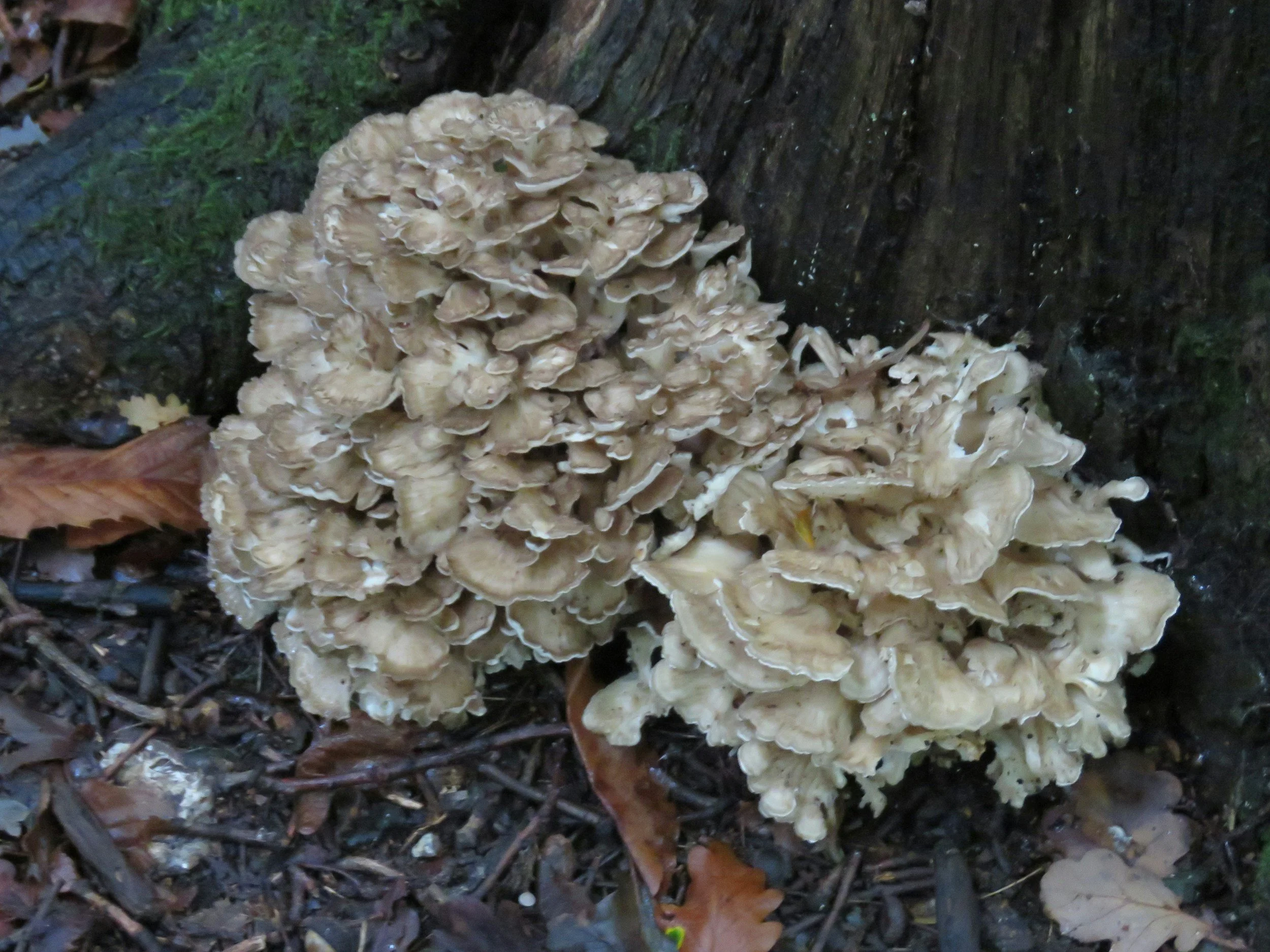
Maitake is a mushroom of place. Native to temperate hardwood forests of northeastern North America, Japan, and parts of Europe, it has a strong ecological association with mature oak trees and, once established, can return to the same root systems year after year. Its Japanese name is often translated as "dancing mushroom," traditionally associated with the excitement of finding one of its abundant clusters in the forest.
Maitake forms enormous masses of overlapping gray-brown fronds, each shaped like a fan or spoon and gathered around a thick central base. Ecologically, it can cause white heart rot in the roots and lower trunk of its host tree before continuing its life as a decomposer. Its flavor is rich, savory, earthy, and intensely aromatic, with a satisfying umami character that makes it an unexpected but beautiful partner for brighter botanicals.
In Maitake Mint, that grounding mushroom character meets refreshing peppermint, gunpowder green tea, and fennel. It is a reminder that balance doesn't always mean making everything taste the same. Sometimes balance comes from bringing very different things into relationship.
Shiitake
Lentinula edodes
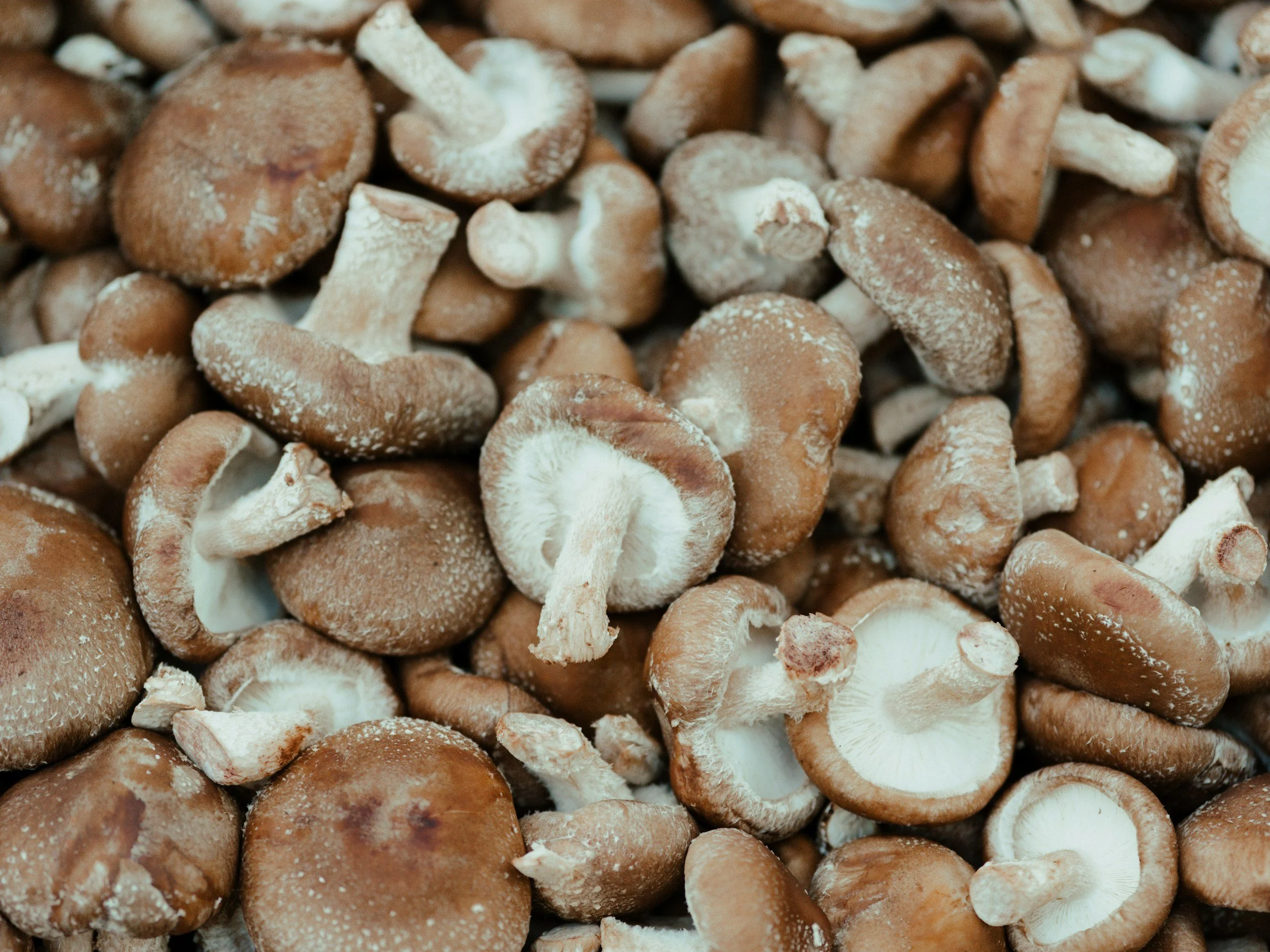
If Reishi connects mushrooms with ritual and Maitake connects them with the forest, Shiitake reminds us that mushrooms can simply be food. Native to East Asia, Shiitake grows naturally on decaying hardwood, particularly trees such as shii, chestnut, oak, and beech. Humans have cultivated it for more than a thousand years, making it one of the clearest examples of a long-standing relationship between people and fungi.
Shiitake has always occupied a space between nourishment and traditional wellness. It is a mushroom that belongs just as comfortably in a kitchen as it does in a conversation about fungi. Ecologically, it is a white-rot saprotroph, breaking down dead hardwood and helping return nutrients to the surrounding ecosystem. Its flavor is meaty, buttery, earthy, and deeply umami-rich, which makes it a surprisingly natural companion to green tea.
Shiitake Genmaicha brings together Shiitake with the toasted character of genmaicha, creating a bridge between Japanese tea culture and the earthy depth of mushrooms. It is one of my favorite examples of the Golden Hourglass philosophy: functional doesn't have to mean clinical, and nourishment doesn't have to sacrifice pleasure.
Sometimes the best way to incorporate something new into your life is simply to make it delicious.
Cordyceps
Cordyceps militaris
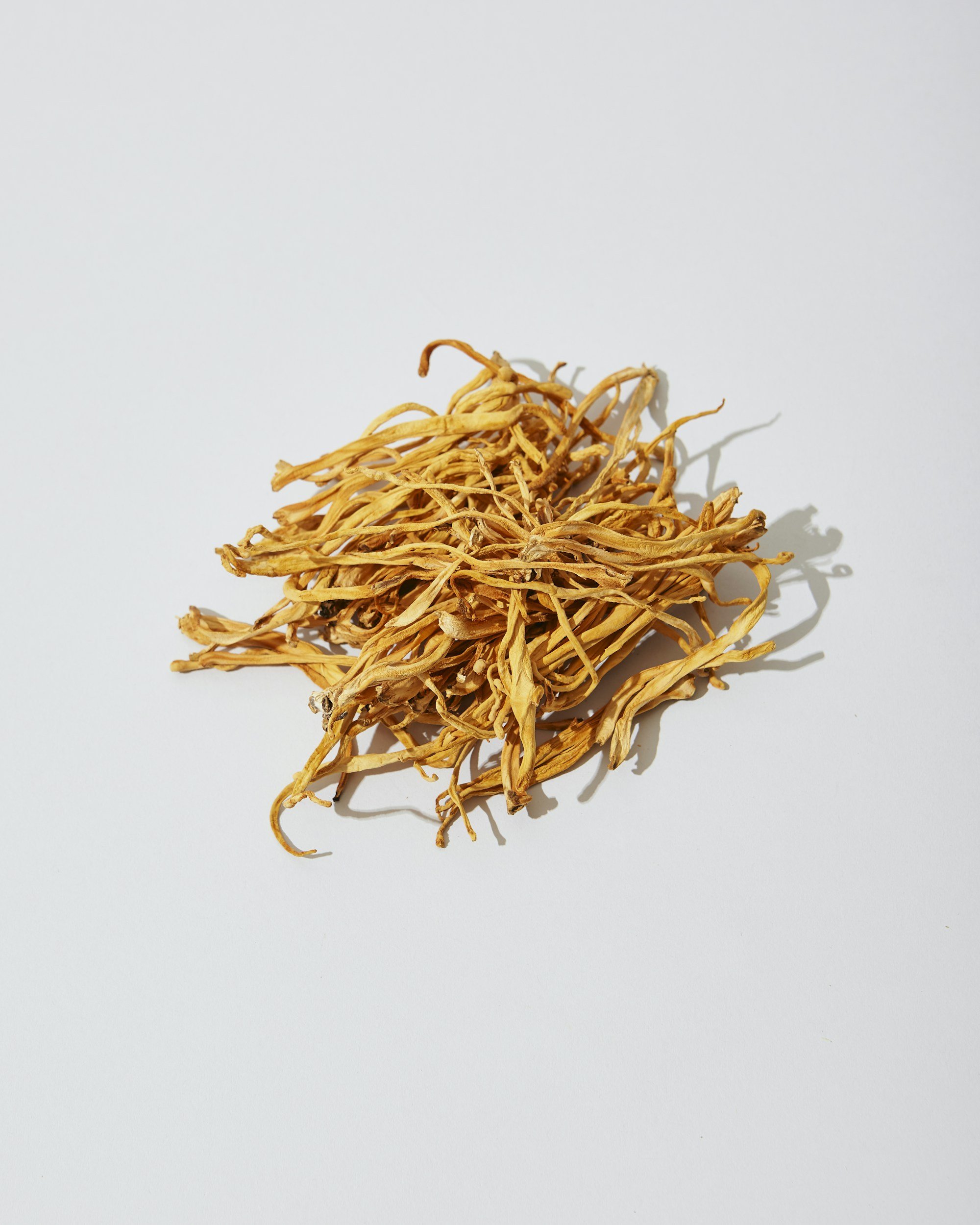
Cordyceps may have the most extraordinary story of the five. Cordyceps militaris is an entomopathogenic fungus, meaning that it lives in association with insects. Its spores infect insect larvae or pupae, eventually consuming the host and producing a vivid orange fruiting body that emerges from the substrate. It is one of those fungal life cycles that sounds almost fictional until you encounter it in nature.
Cordyceps has a long history in Tibetan and Chinese traditional practices, where related fungi have been valued for generations. Its appearance is just as distinctive as its lifecycle: bright orange to vermillion, club-shaped fruiting bodies rising from the ground like tiny flames. Its flavor is much more approachable than its life story might suggest—savory, warm, slightly sweet, and pleasantly earthy.
In Golden Hourglass, Cordyceps belongs to the daytime. It represents movement, momentum, and the willingness to engage with the world after taking time to recharge. Because slowing down doesn't mean stopping; sometimes rest is what allows us to move forward with greater intention.
One Mushroom. One Cup. One Hour.
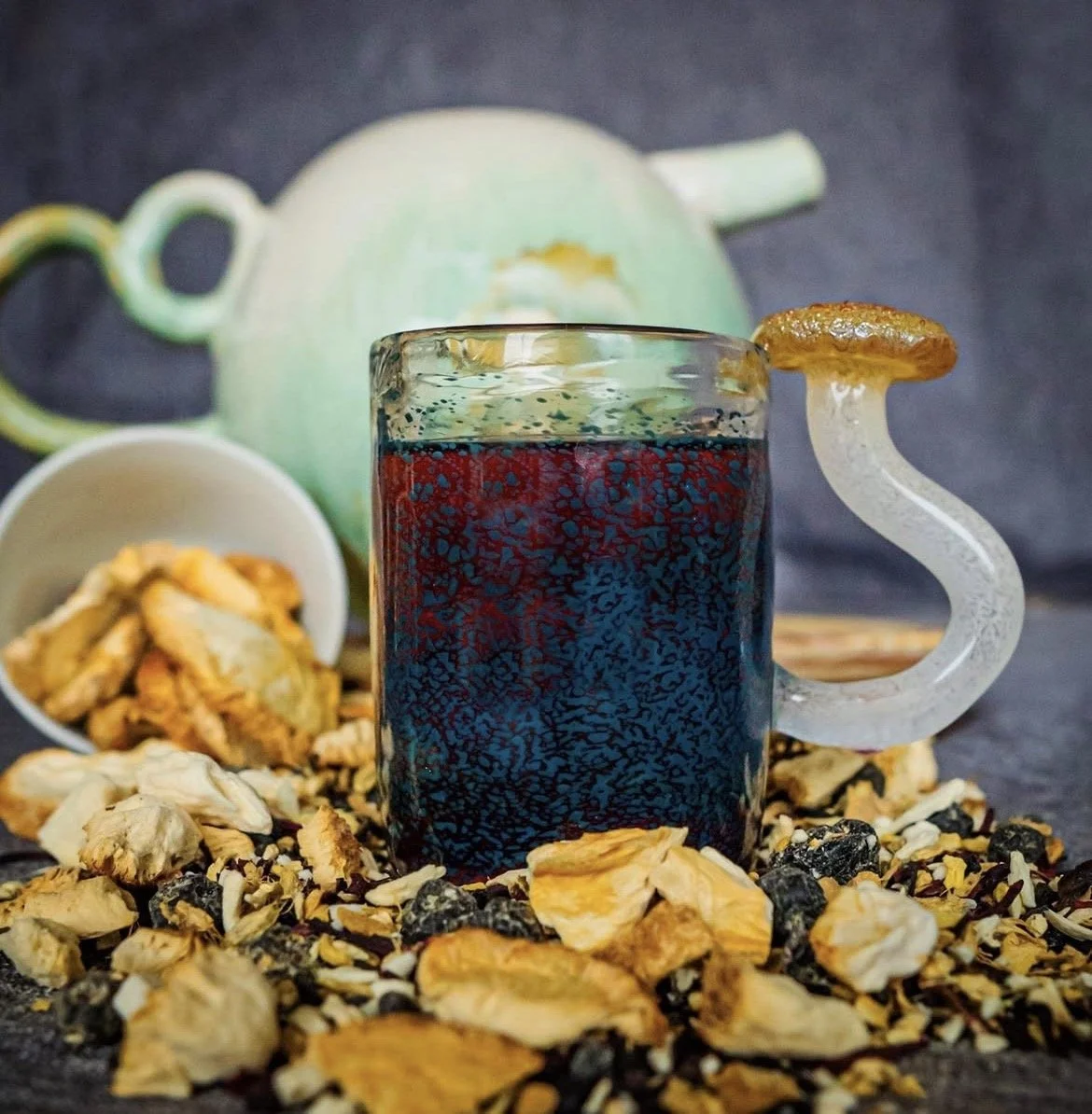
Each Golden Hourglass blend begins with a single mushroom species and ends with a carefully considered combination of complementary ingredients. I pair mushrooms with fruits, roots, flowers, herbs, and teas that allow their individual character to shine while creating something genuinely enjoyable to drink. That's important to me because I don't want mushroom tea to feel like a chore. You shouldn't have to love mushrooms to enjoy a mushroom tea, and you shouldn't need to approach every cup as a health intervention.
It can simply be tea.
A cup can mark the beginning of your morning, accompany an afternoon of focused work, or signal that the workday is over. It can become something you share with another person, or something you keep entirely for yourself. And somewhere in that ordinary ritual is the larger lesson I learned from studying the environment: Health is relational.
A forest thrives through relationships. Fungi thrive through relationships. We do, too. The food we eat, the environments we inhabit, the people we spend time with, the rhythms we keep, and the moments we give ourselves to rest all become part of the larger ecosystem of our lives.
That's ultimately what Golden Hourglass represents to me—not a promise of a perfect life and not a shortcut to wellness, but a reminder to slow down long enough to participate in your own life. So make yourself a cup. Give it time. Notice the flavor, your surroundings, and how it feels to sit still for a little while.
And remember that the ecosystem you're caring for isn't only the forest outside your window.
It's also the one within you.
Further Learning Resources:
https://www.herbalreality.com/herbalism/western-herbal-medicine/medicinal-mushrooms-introduction/
