

“What Are They Good For?” Rethinking Our Relationship with Medicinal Mushrooms
If you've spent any time talking about herbs or medicinal mushrooms, you've probably heard the question: “What's it good for?” I understand why people ask. Usually, it comes from genuine curiosity. We encounter an unfamiliar mushroom or plant and want to know how it might help us. What does it do? What does it contain? Is there research behind it? Could it support my health? These are reasonable questions. But after years of asking them myself, I've started to wonder what we miss when they become the only questions we ask.
I don't dislike the question because it is inherently wrong. I dislike what can happen when we reduce an entire organism—or an entire relationship with the natural world—to a list of problems it might potentially solve. There are actually a lot of questions hiding inside “What's it good for?” We might be asking about traditional uses, chemistry, biological effects, nutritional value, clinical research, preparation, safety, taste, ecology, or cultural significance. For me, those cultural and ecological questions are especially important. I think we owe a tremendous amount to the ancestors, scribes, healers, farmers, researchers, and communities who observed the natural world and passed knowledge forward. Culture and ecology can tell us not only what a mushroom does, but why it became special to people in the first place. A mushroom can be valuable without having a demonstrated therapeutic effect. It can be interesting, beautiful, nourishing, culturally significant, ecologically important, delicious, or simply worth paying attention to.
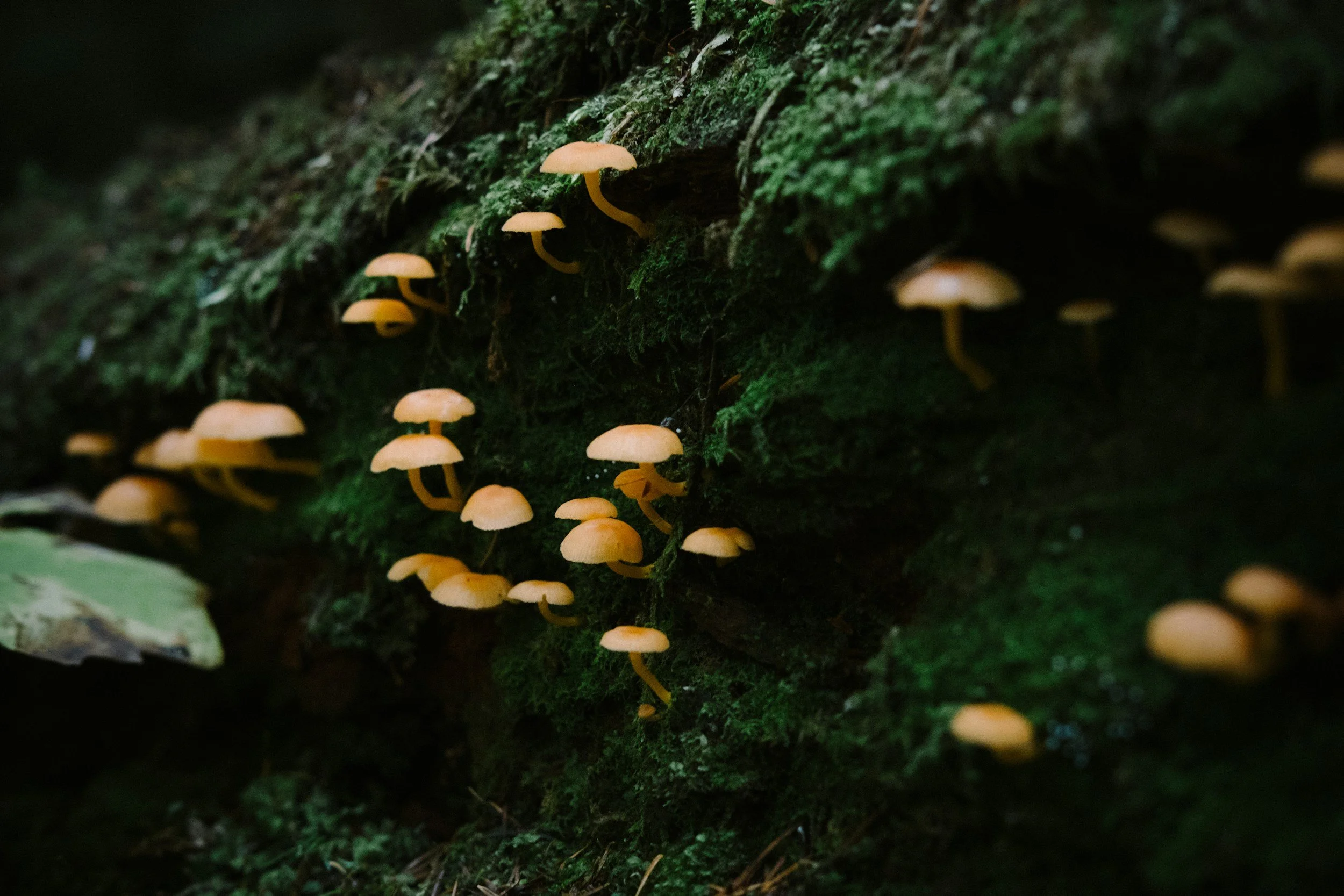
The reductionism problem
We have become very good at taking complicated things apart. We can isolate compounds, study mechanisms, measure biological effects, and investigate individual pathways. These are valuable scientific tools. But there is a difference between studying the parts of something and defining the whole thing by its parts. A mushroom is not simply mushroom → compound → biological effect → human problem solved. It is also an organism, a food, an ecological participant, a sensory experience, and part of a cultural and environmental context. None of those descriptions cancel the others out.
Sometimes herbalism can begin to sound a little like online shopping: Does it have antioxidants? Does it support immunity? Does it reduce inflammation? Does it contain this compound? What does it do? Suddenly, we're shopping for molecules. I genuinely love scientific inquiry, but what fascinates me about mushrooms is actually how much science opens up the web of life around them. The relationships between roots and fungi, fungi and trees, birds and bears, soil and water, and all the rhythms happening around us that we don't always notice. I would never want to reject science. I want to expand the questions we are willing to ask. Science can help us study a mushroom's mechanisms without requiring us to define the mushroom by those mechanisms.
My mindset: Health as balance
This philosophy is connected to how I understand health itself. I think of health as the presence of balance and harmony: within and without, above and below. I mean all of the dimensions of holistic health and natural living—the physical and emotional, the individual and the community, humans and the environment, work and rest, body, mind, and spirit. These aren't isolated categories to me. They are different expressions of an interconnected system.
The language of “within and without, above and below” also resonates with ideas of yin and yang: the recognition that life contains complementary forces that continually influence one another. It is a concept I encountered through herbalism that helped give language to something I already sensed: health isn't a static state. Life is constantly moving, adapting, and seeking equilibrium. I see an example of this in a forest. It is easy to become so focused on one tree that we forget we are looking at a forest at all. In some ways, this is how I think about the difference between a symptom-based approach and a more holistic one. The symptom matters, but it is also part of a much larger picture.
I don't necessarily want to eliminate every symptom as quickly as possible. I want to understand what the symptom might be telling me. Sometimes a symptom needs to be treated directly. Sometimes it is information. Sometimes it is both. That distinction shapes the way I think about mushrooms and food as medicine. Mushrooms can be food. They can have medicinal properties. They can be part of a daily ritual of nourishment. But food is only one requirement of a healthy life—and the quality of that food matters. So do our relationships, environment, rest, movement, purpose, and connection. A mushroom doesn't have to solve a particular problem for it to have a meaningful place in a healthy life.
I also think the journey toward balance begins with self-awareness. Balance isn't going to look the same for everyone, or even the same for us from one season of life to another. If I know that I tend to isolate when I'm struggling, self-awareness gives me the opportunity to recognize that pattern and intentionally do something different—perhaps taking a pottery class, calling a friend, or putting myself somewhere that allows connection to happen. If I tend to neglect myself when I'm surrounded by other people, perhaps the movement toward balance is the opposite: stepping away and becoming familiar with my own needs again. The point isn't to prescribe one universal path toward wellness. It is to know yourself well enough to recognize what might help you move toward balance.
When healthcare becomes “sick care”
Part of why this way of thinking about health matters to me is because symptom-based “sick care” can sometimes irk my spirit. There are times when healthcare seems organized around identifying the problem, naming the symptom, and figuring out how to make it go away. There is absolutely a place for that. When something is wrong, we want relief, and sometimes we need immediate intervention. But when that becomes the entirety of the conversation, I wonder what gets left out.
I've found myself wishing there was more time for questions—not just “What hurts?” or “How long have you had this symptom?” but questions about the person experiencing it. What is happening in your life? What has changed? How are you eating, sleeping, working, and resting? What is your environment like? What relationships support you? What burdens are you carrying? I understand that healthcare providers are working within systems with limited time and enormous demands. This isn't about blaming individual practitioners. It is about wondering what becomes possible when we make enough room to understand the whole person.
That experience has influenced how I think about herbalism, mushrooms, and wellness. I don't want to replace one reductionist system with another—to simply trade pharmaceuticals for mushrooms and call the problem solved. That would still leave us asking the same narrow question: “What is this going to do for me?”
What does thriving actually look like?
This brings me to a question that is bigger than herbalism: Are we aiming high enough when we talk about health?
We can measure life expectancy, disease rates, income, productivity, hospital admissions, and countless biological markers. But thriving is bigger than any single measurement. The OECD's well-being framework, for example, includes income and wealth, work, housing, health, environmental quality, work-life balance, social connections, safety, civic engagement, and subjective well-being. It also considers whether the resources needed to sustain well-being into the future are being maintained.
The United States offers an interesting example when we look at longevity. U.S. life expectancy reached a record high of 79.0 years in 2024. That's worth celebrating. But it also raises another question: Is living longer the same thing as thriving? Life expectancy tells us something important about population health, but it cannot tell us everything about the quality, meaning, vitality, relationships, environmental conditions, or subjective experience of those years.
And then there is the environment that makes human life possible in the first place. EPA climate indicators document substantial changes across the United States, including increasingly frequent heat waves, changes in heat-wave duration and season length, shifts in growing seasons, and changes affecting ecosystems and human health. I don't know how we can talk about human health as though it exists separately from the systems that sustain us. Our health exists within water systems, food systems, communities, climates, landscapes, and ecosystems. We are not outside of nature looking in. We are part of it.
From reductionism to relationship
This is where I find myself drawn toward vitalism and relativism as philosophical lenses for thinking about medicinal mushrooms. I'm not suggesting that vitalism should replace scientific investigation, or that every traditional explanation should automatically be accepted as scientific fact. I'm interested in a way of thinking that allows us to remember the whole while we study the parts.
Reductionism asks us to isolate. A relational perspective asks us to reconnect. It asks us to put the mushroom back into context: the organism, the food, the person, the ecosystem, the culture, and the relationships surrounding all of them.
So when I encounter a mushroom, I still want to know what it can do. I want to know what the research says, understand its chemistry, learn how people have traditionally prepared and used it, and know how to prepare it safely. But I also want to ask: What is this mushroom? Where does it grow? What does it need? What relationships sustain it? How have people interacted with it across generations? What do we know scientifically—and what don't we know? What can observing it teach me?
For me, that is where medicinal mushrooms become much more interesting. The mushroom is not just a compound, a treatment, a food, or a product. It is part of a relationship. And perhaps learning to see the mushroom in its fullness can teach us something about seeing ourselves that way, too—not as a collection of symptoms to eliminate, but as whole beings living within a web of relationships, always changing, always adapting, and always finding our way back toward balance.
